
When it comes to outdoor adventures, few experiences can rival the comfort and relaxation of sleeping in an ultra light adventure hammock.
For outdoor enthusiasts, Simply Hammocks offers a range of high quality hammocks that are not only comfortable but also lightweight and easy to carry. Whether you're heading out on a camping trip, hiking expedition or weekend adventure, the right hammock setup can help you enjoy a cosy and restful night's sleep in the great outdoors.
In this guide, we'll explore how to make the most of your ultra light adventure hammock, from choosing the right setup to staying warm throughout the night.
Quick Tips for Hammock Camping
Before you set off on your adventure, keep these essentials in mind:
- Choose a lightweight, compact hammock made from durable materials.
- Set up between two healthy trees approximately 10-15 feet apart.
- Use hammock straps rather than ropes to protect tree bark.
- Add an under quilt and suitable sleeping bag for warmth.
- Lie diagonally in the hammock for maximum comfort.
- Always check your gear before use.
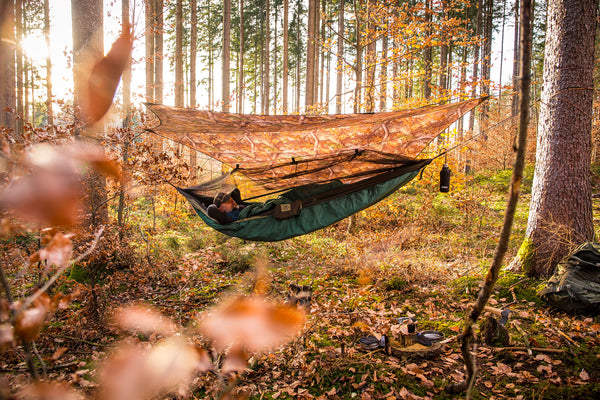
Pictured: Traveller Tarp Forest £134.99, Underquilt £144.99
Choosing the Right Hammock
Before you embark on your hammock camping adventure, it's important to choose the right hammock.
For an ultra light adventure, look for a hammock that is lightweight, compact and easy to pack. Materials such as parachute nylon or ripstop nylon are ideal, as they offer an excellent balance of durability and low weight.
Simply Hammocks offers a variety of options, making it easy to find a hammock suited to your next outdoor adventure.
Setting Up Your Hammock and Tarp
Once you've chosen your hammock, the next step is finding the perfect place to set up.
Look for two sturdy trees or anchor points that are approximately 10–15 feet apart. Before hanging your hammock, make sure the trees are healthy and not at risk of falling.
Use strong hammock straps to secure your hammock safely. It's best to avoid ropes or cords, as these can damage tree bark and impact the surrounding environment.
Before settling in for the night, double check that your straps are tight and secure.
When using a hammock tarp, we recommend hanging it around 20cm from your hammock fixings. This helps maintain the correct distance between the hammock and tarp, providing effective protection from the elements.
Keeping Warm with a Hammock Underquilt and More
One of the most common concerns when hammock camping is staying warm, particularly during colder weather.
Because air circulates beneath a hammock, you can lose heat more quickly than when sleeping on the ground. Fortunately, there are several ways to stay warm and comfortable throughout the night.
Underquilt

Pictured: Underquilt £144.99
Investing in a hammock Underquilt is one of the most effective ways to stay warm.
An Underquilt hangs beneath your hammock and provides insulation from the cold air below. Some of our under quilts can keep you comfortable in temperatures as low as -3°C (26.6°F).
Sleeping Bag
A good quality sleeping bag is another essential piece of equipment.
For the best results, choose a sleeping bag suited to the temperatures you'll be camping in and place it inside your hammock for added warmth. Always check the temperature rating and insulation properties, as not all sleeping bags are designed for the same conditions.
Top Quilt
A top quilt works alongside your under quilt by covering you from above.
It helps trap body heat and provides an extra layer of comfort, keeping you warm and cosy throughout the night.
Clothing
Your clothing choices can also make a big difference.
Wearing thermal clothing or base layers adds valuable insulation, while warm socks and a beanie help keep your extremities warm when temperatures drop.
Finding the Best Sleeping Position
Finding the right sleeping position is key to getting a good night's sleep in a hammock.
Rather than lying directly in line with the hammock, try lying diagonally across it. This allows your body to rest in a flatter position, reducing pressure points and improving overall comfort.
For additional support, use a small pillow or inflatable camping pillow to support your neck and head.
Safety Considerations
While hammock camping is generally very safe, it's important to take a few precautions before each trip.
- Check your gear for signs of wear and tear before use.
- Ensure your hammock is set up securely.
- Hang your hammock at a safe height above the ground.
- Follow Leave No Trace principles and leave your campsite exactly as you found it.
- Always be mindful of your surroundings and the natural environment.
Final Thoughts
Sleeping in an ultra light adventure hammock offers a unique and comfortable way to experience the outdoors.
By choosing the right hammock, setting it up correctly, staying warm and following basic safety guidelines, you can enjoy a restful night's sleep while surrounded by nature.
Simply Hammocks offers a range of quality hammocks and accessories designed to enhance your outdoor adventures. So, pack your gear, find the perfect spot and head off on your next hammock camping adventure with confidence.
Frequently Asked Questions
Is it comfortable to sleep in a hammock overnight?
Yes, many people find sleeping in a hammock surprisingly comfortable. Lying diagonally across the hammock creates a flatter sleeping position, helping to reduce pressure points and provide better support throughout the night. With the right setup, including an underquilt and suitable sleeping bag, a hammock can be a comfortable alternative to sleeping on the ground.
Can you sleep in a hammock every night?
Many outdoor enthusiasts regularly sleep in hammocks while camping. Comfort depends on choosing the right hammock, hanging it correctly and using suitable insulation for the weather conditions.
How do you stay warm in a hammock?
Because air circulates underneath a hammock, it's important to insulate against heat loss. An underquilt, a temperature-rated sleeping bag, warm clothing and a top quilt all help keep you comfortable during cooler nights.
Do I need an underquilt for hammock camping?
An underquilt isn't essential in warm weather, but it is highly recommended for cooler temperatures. It provides insulation underneath the hammock where sleeping bags can become compressed and lose their effectiveness.
What is the best hammock for camping?
The best camping hammock is lightweight, compact, durable and easy to set up. Hammocks made from parachute nylon or ripstop nylon are popular because they offer an excellent balance of strength, comfort and portability.
How far apart should trees be for a hammock?
Ideally, choose two healthy trees approximately 10–15 feet (3–4.5 metres) apart. This provides enough space to achieve the recommended hanging angle while keeping the hammock comfortable and secure.
Should I use ropes or hammock straps?
Tree-friendly hammock straps are always recommended. They distribute weight more evenly, help protect tree bark and provide a more secure attachment than standard ropes.
Can you sleep in a hammock without a tarp?
Yes, but a hammock tarp provides valuable protection from rain, wind and falling debris. If there's any chance of bad weather, using a tarp is highly recommended.
What is the best way to sleep in a hammock?
For the most comfortable night's sleep, lie diagonally across the hammock rather than directly in line with it. This creates a flatter sleeping position and reduces pressure on your back.
Can hammock camping be used in winter?
Yes, hammock camping is possible during colder months with the right equipment. Using an underquilt, insulated sleeping bag, warm clothing and a weatherproof tarp can help you stay comfortable in lower temperatures.
Is hammock camping better than tent camping?
Both have their advantages. Hammocks are lightweight, quick to set up and keep you off uneven or wet ground, while tents provide enclosed shelter and can be better suited to exposed locations without suitable trees.
What accessories do I need for hammock camping?
A typical hammock camping setup includes:
- Hammock
- Tree-friendly suspension straps
- Tarp
- Underquilt
- Sleeping bag
- Top quilt (optional)
- Camping pillow


